
Projectsmate
The Hidden Operational Gaps That Quietly Sabotage Architectural Projects
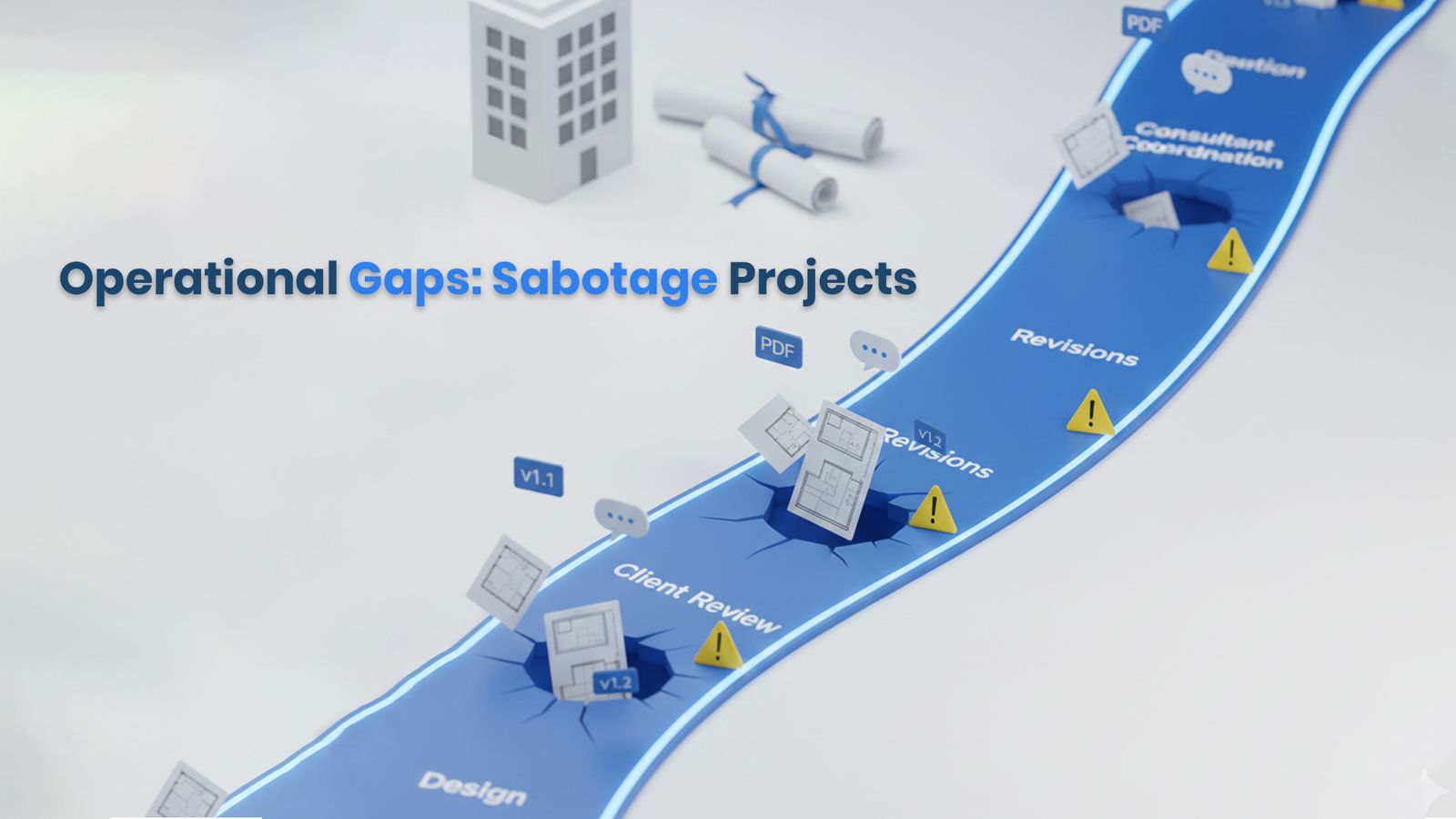
Architectural and interior design studios often lose time not because teams are slow or clients are indecisive, but because decisions move informally. A casual yes on WhatsApp, a quick verbal approval during a site walkthrough or a forwarded PDF with a small comment feels harmless in the moment yet it shapes drawings, vendor coordination, consultant activity and execution quality. When approvals are treated as moments rather than rituals, studios slowly slip into misalignment, version confusion, and silent delays that accumulate without warning.
The beginning of every project is filled with clarity, intent, and excitement. But somewhere along the way, as decisions get more complex and dependencies grow, informal approvals trigger the most expensive type of chaos: rework that nobody planned for. This is where studios struggle the most, not in design quality but in decision discipline.
Why Informal Approvals Break Studio Operations
Informal approvals feel convenient, but they introduce deep structural problems. These issues are not theoretical, they reflect how real studios struggle daily to keep drawings, teams, and timelines consistent.
1. Ambiguity Creates Diverging Interpretations
When a client says “approved” without context or documentation, multiple teams interpret it differently. Studios often see this unfold in real time:
- Architects assume the layout is locked
- PMs think the approval is conditional
- 3D teams continue referencing older versions
- Consultants remain unaware that anything changed
This divergence creates parallel workflows that eventually collide, forcing hours of correction.
2. Version Drift Silently Accumulates Risk
Architecture thrives on revision but without structured approvals, revisions scatter. Common real-world outcomes include:
- Vendors executing from outdated PDFs
- Clients reviewing an earlier version unknowingly
- Consultants overlaying plans that don’t match
- Teams blending elements from multiple revisions
Version drift rarely shows itself early and it reveals itself only when it’s too late and too expensive to fix easily.
3. Floating Approvals Stall Momentum
Some approvals aren't clear enough to act on. They sound like approvals but are not formally confirmed. This leads to:
- Contractors pausing work to avoid mistakes
- Material orders waiting indefinitely
- Consultants holding back their deliverables
- Teams repeatedly revisiting the same files for reassurance
The studio loses momentum not through mistakes but through uncertainty.
4. Emotional Approvals Trigger Technical Rework
Clients often approve visuals emotionally like a colour, a finish or a layout without understanding technical implications. This results in:
- Layouts breaking MEP coordination.
- Finishes conflicting with budget or durability.
- Lighting plans not matching material behavior.
- Entire drawing sets needing recalibration.
What felt right to the client becomes a technical setback for the team.
The Core Solution: Studios Need Approval Rituals
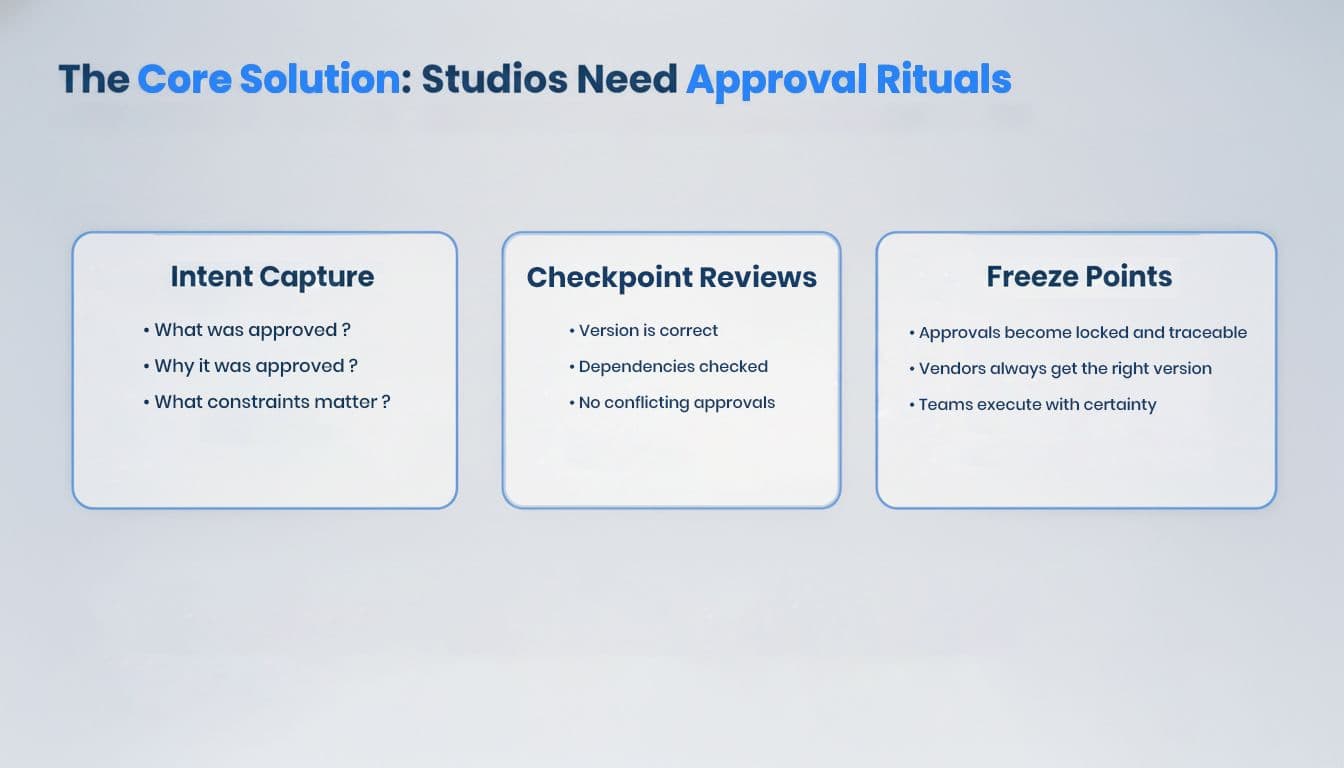
Approval rituals don’t slow studios down, they rather stabilize them. They create clarity, consistency, and predictable progress across disciplines.
Intent Capture Preserves Decision Meaning
Every approval should answer:
- What exactly is approved ?
- Why the decision was made ?
- What constraints were considered ?
- Which downstream tasks are affected ?
Intent becomes a long-term anchor for clarity instead of short term ambiguous decisions.
Checkpoint Reviews Protect the Studio’s Workflow
Before approving anything, a structured review ensures:
- The version is correct.
- Dependencies are accounted for
- No earlier approvals are contradicted.
- Technical feasibility is validated.
- Consultants are aligned.
This two-minute pause saves days of preventable rework.
Freeze Points Maintain Stability Across the Team
Once approved, the decision must freeze. Freeze points ensure that:
- The approval becomes locked and traceable.
- Vendors receive the correct version.
- Teams execute with confidence.
- Any change requires a formal unfreeze process.
Freeze points create discipline where chaos usually creeps in.
The Fix: How Projectsmate Becomes the Approval Engine Studios Have Always Needed
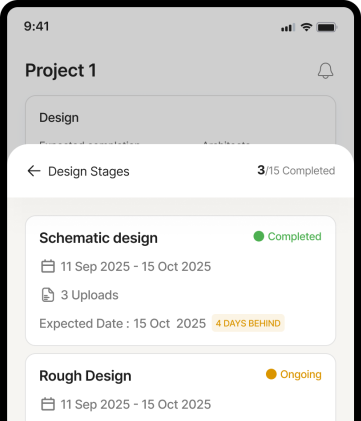
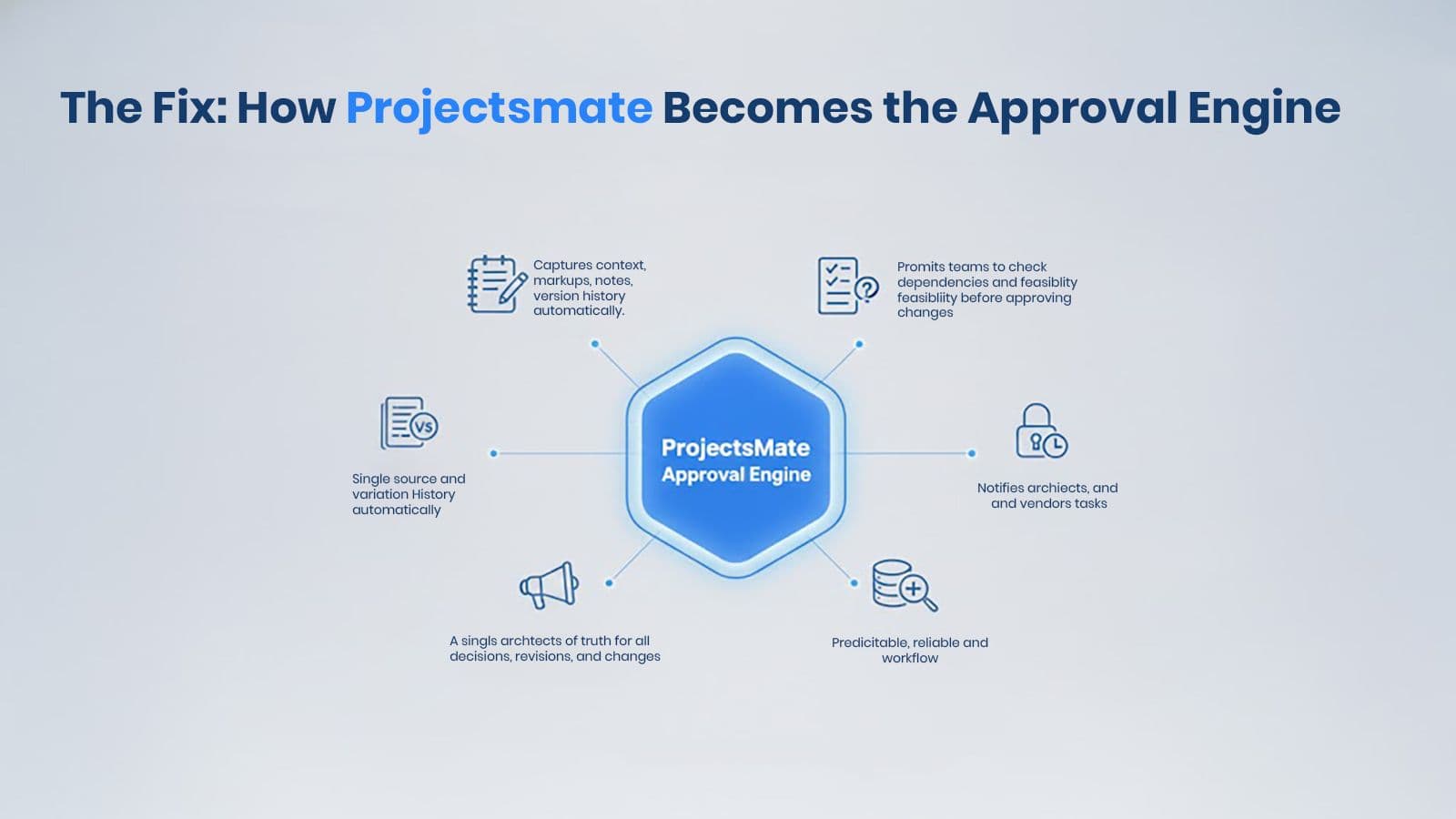
Projectsmate transforms approvals from scattered chatter into a structured backbone for project clarity. It captures intent, enforces review discipline, and locks decisions in a way that protects the entire studio from drift.
How ProjectsMate Makes Approval Rituals Effortless
- Captures context, markups, notes, and version history automatically.
- Prompts teams to check dependencies and feasibility before approving changes.
- Creates automatic freeze points that lock decisions and trigger tasks.
- Notifies architects, consultants, and vendors instantly.
- A single source of truth for all decisions, revisions, and changes.
Projectsmate doesn’t just organise approvals, it turns them into a predictable, reliable and a transparent workflow. The studios that are constantly battling misalignment and rework, this particular shift is transformative and ever rewarding.
Rituals Protect What Moments Can Break
Approvals may look small, but they shape the accuracy, consistency, and efficiency of every drawing and decision that follows. When studios treat approvals as rituals instead of improvised exchanges, they operate with far greater confidence and control. Projectsmate enables this discipline at scale, ensuring that clarity is never lost, versions never drifts and decisions never go unrecorded.
In an industry where precision is everything, approval rituals are not optional, they are rather the foundation of a well-run studio and Projectsmate is the engine that finally makes this discipline effortless.