
Projectsmate
Every project looks organized on paper, until construction starts. That’s when coordination gaps appear: missing details, old drawings, overlapping revisions, or instructions lost between site and studio.
It doesn’t mean teams are careless. It means information travels faster than structure. Site coordination is where design meets reality and without a clear system, even good communication turns into noise. This checklist helps architecture studios keep control of their projects while protecting design intent on-site.
Common Coordination Breakdowns
Coordination problems rarely show up as one big error. They start small and multiply quietly.
1. Revisions without trace
A small adjustment made during a design meeting, say, relocating an opening or resizing a column, doesn’t get logged or reissued. The contractor continues with an older drawing, and by the time the mistake surfaces, materials are already on-site. The rework costs more than the change itself.
Untracked revisions create invisible costs, they disrupt schedule, create tension among teams, and force architects into defensive mode. The fix is simple: traceability. Every change needs a timestamp, a version number, and visibility for those who’ll act on it.
2. Too many communication channels
Studios often rely on WhatsApp for quick questions, email for formal updates, and cloud folders for drawings. Each feels efficient on its own, but collectively they scatter accountability. Two people might respond to the same issue with different information and by the time anyone realizes, the wrong version is already being built.
The solution isn’t to stop using these tools, it’s to ensure they all flow into a single, searchable hub. When all information leads back to one verified space, you prevent “lost in chat” moments that turn into coordination chaos.
3. Delayed decision loops
RFIs, site queries, and material substitutions pile up when roles are unclear. The structural engineer assumes the architect will respond, the architect waits for the client, and the site team continues on assumption. By the time clarification comes, progress has already gone in another direction.
Defining decision ownership early, who approves what, and in what timeframe, creates rhythm. A 24-hour or 48-hour feedback window for field queries keeps the site pace intact and avoids idle time.
4. Incomplete handovers
When design development flows directly into construction without formal sign-off, everyone carries a different version of understanding. A lighting layout might still be in concept while the civil team has already started ceiling works. That mismatch leads to onsite improvisation and improvisation leads to inconsistency.
Each phase transition should have a clear handover checklist: what’s finalized, what’s pending, and what changes are still open. It’s a small discipline that saves weeks of confusion late
Building Clarity Into Coordination
Good coordination isn’t about micromanaging; it’s about creating a shared reference point. Everyone from contractor to consultant should be looking at the same truth.
A few principles make that possible:
- Keep drawings and revisions accessible in one verified location.
- Assign clear responsibility for approvals and updates.
- Record all decisions, even verbal ones, before they fade from memory.
Structured clarity doesn’t slow the project; it keeps it moving. Even standards like ISO 19650 and the RIBA Plan of Work emphasize consistent information management as a foundation for project success, not paperwork for its own sake.
The Coordination Checklist
Use this as a practical rhythm to stay aligned on-site:
1. Assign a single coordination lead.
Every project needs a defined coordination owner, often the project architect or site lead responsible for managing drawings, site updates, and consultant responses. Without one point of contact, issues circulate endlessly between teams. A clear coordination lead ensures decisions are recorded, not just discussed.
2. Centralize all project data.
When files live across multiple drives, folders, and chats, information becomes fragmented. Create one structured project space categorized by stage, discipline, and drawing set. Every stakeholder should know exactly where to find the latest issue. It reduces dependency on memory and gives the project a single source of truth.
3. Versions control every drawing.
Even the best-intentioned teams build from outdated drawings if the system allows it. Number every revision, issue formally, and archive previous sets. Always communicate what changed and why. A two-minute update log can prevent a two-week rework cycle. ISO 19650 outlines this clearly, the moment information leaves your hands, it should be verifiable, traceable, and timestamped.
4. Track discussions as actions.
Meetings, calls, and site walks are where most coordination actually happens. But if the outcomes aren’t logged, those decisions fade fast. Turn every discussion into an actionable note: what was decided, who’s responsible, and what’s due.
5. Close loops before moving forward.
Each phase, concept, design development, tender, construction, should be closed consciously. Summarize approvals, mark unresolved issues, and confirm all parties agree before advancing. It’s how projects maintain integrity across months of work. A five-minute closure review saves five days of follow-up later. And it gives everyone, clients included, a clear picture of progress.
Turning Process Into Support
Every architect knows the value of clarity; the challenge is maintaining it under the speed and pressure of live projects. That’s why the structure isn’t control, it's a relief. When information is centralized and traceable, architects can focus on design, not damage control.
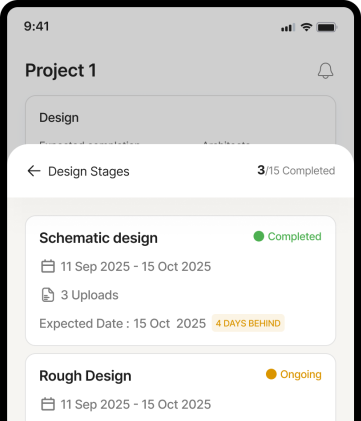
With Projectsmate, studios coordinate drawings, RFIs, and tasks within a single visual system. It’s designed for creative workflows, no spreadsheets, no micromanagement, just clarity where it matters most.
Clarity doesn’t slow you down; it gives you control. And when everyone builds from the same understanding, architecture regains what it deserves most, peace of mind.
If your studio values clarity as much as creativity, explore www.projectsmate.com.