
Projectsmate
Every design project begins with a shared understanding of the problem and a vision of the final outcome. Designers seek clarity because every decision they make builds on the one before it. Clients expect progress because they assume the team is moving in one unified direction. Somewhere between these expectations lies the real challenge that quietly disrupts even the most talented studios. It is not lack of skill, slow output or insufficient effort. It is the slow erosion of design intent caused by scattered communication.
The modern studio operates in a world where communication happens everywhere at once. WhatsApp messages land during lunch. Emails arrive late at night. PDFs with annotations show up unannounced. Screenshots are forwarded by multiple stakeholders who are not even in the main thread. Calls end with verbal approvals that nobody documents. At first it feels manageable because each message appears small. But creative work is deeply sensitive to context, and when context is fractured, intent dissolves.
The subtle tragedy is that teams often realise misalignment only when the damage becomes visible. A layout is rejected because it followed feedback from the wrong channel. A revision cycle stretches into three extra rounds because one micro comment in a WhatsApp chat never made it to the design file. Two people interpret the same note differently because they saw it in two different places. These moments create frustration, lost hours and unnecessary rework that could have been avoided if feedback lived in one coherent space.
1. How Fragmented Feedback Splinters Context
A single project becomes multiple versions of truth
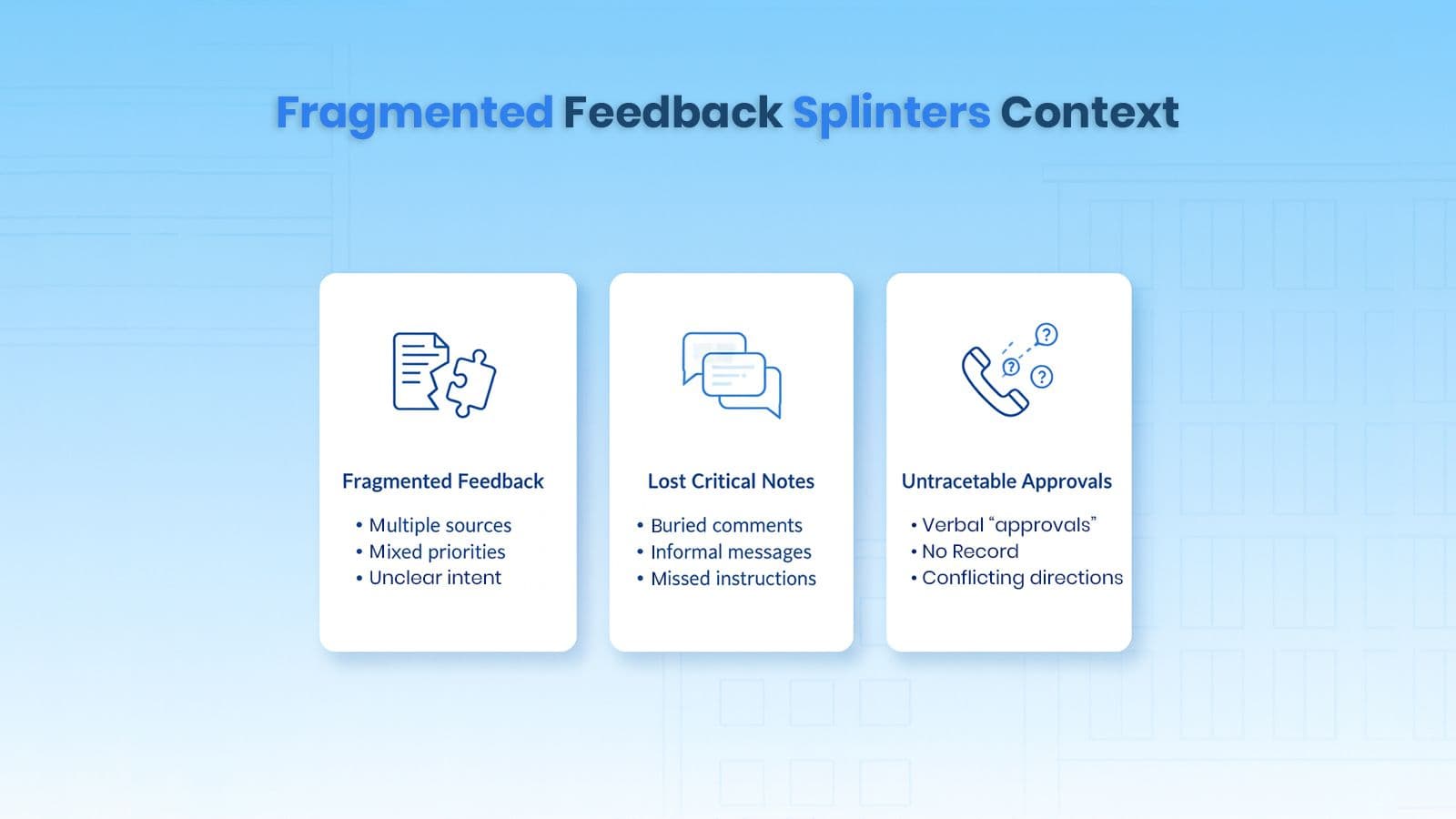
When feedback enters through five or six channels, the design team begins to assemble meaning from incomplete pieces. One note exists on email, another in a PDF, another in a chat, and each arrives with a slightly different tone and priority. The designer is forced to piece them together like a puzzle without knowing which piece matters most. This splintering creates parallel realities of what the client actually wants.
Critical comments get buried under casual chatter
Channels like WhatsApp blur the boundary between informal and actionable communication. A message that begins with a friendly update may end with an important instruction that gets lost in the scroll. Designers often discover too late that the client’s strongest feedback was sent casually in a chat that nobody archived.
Verbal approvals without traceability
Calls and meetings often end with phrases like looks good or let us finalise this or proceed with this direction. But without recorded context, these approvals quickly lose authority. When another stakeholder contradicts that approval through email, the team is left debating which instruction to follow. This uncertainty is where delays begin.
2. How Misalignment Builds into Costly Rework
Small gaps stack into big delays
A single misplaced screenshot or half remembered call may not seem dangerous. But when a project runs for weeks, these tiny gaps multiply. The team unknowingly works with outdated information. Review cycles slow down. The designer spends more time clarifying than creating.
Here is where the hidden cost becomes measurable.
• Time is lost searching for the latest comment.
• Designers repeat work that was already done correctly .
• Managers intervene to resolve avoidable contradictions.
• Clients become impatient because they assume the studio is slow .
• Trust erodes when the output does not match expectations.
These outcomes rarely come from incompetence. They come from disorganised inputs.
Feedback without hierarchy confuses priorities
When notes come from multiple places, it is hard to understand which instruction holds the highest weight. A PDF markup may contradict a WhatsApp voice note. A stakeholder may reply to an outdated email. Without a central feedback path, teams improvise. Improvisation in design decision making always increases the risk of deviation from the original intent.
Creative flow breaks under constant context switching
Design thinking thrives on continuity. When a designer must repeatedly switch between apps to check comments, their mental model of the project weakens. The work becomes mechanical rather than conceptual. The creative thread breaks and the resulting output loses cohesion.
3. The Studio’s Silent Complicity in the Chaos
Accessibility is mistaken for efficiency
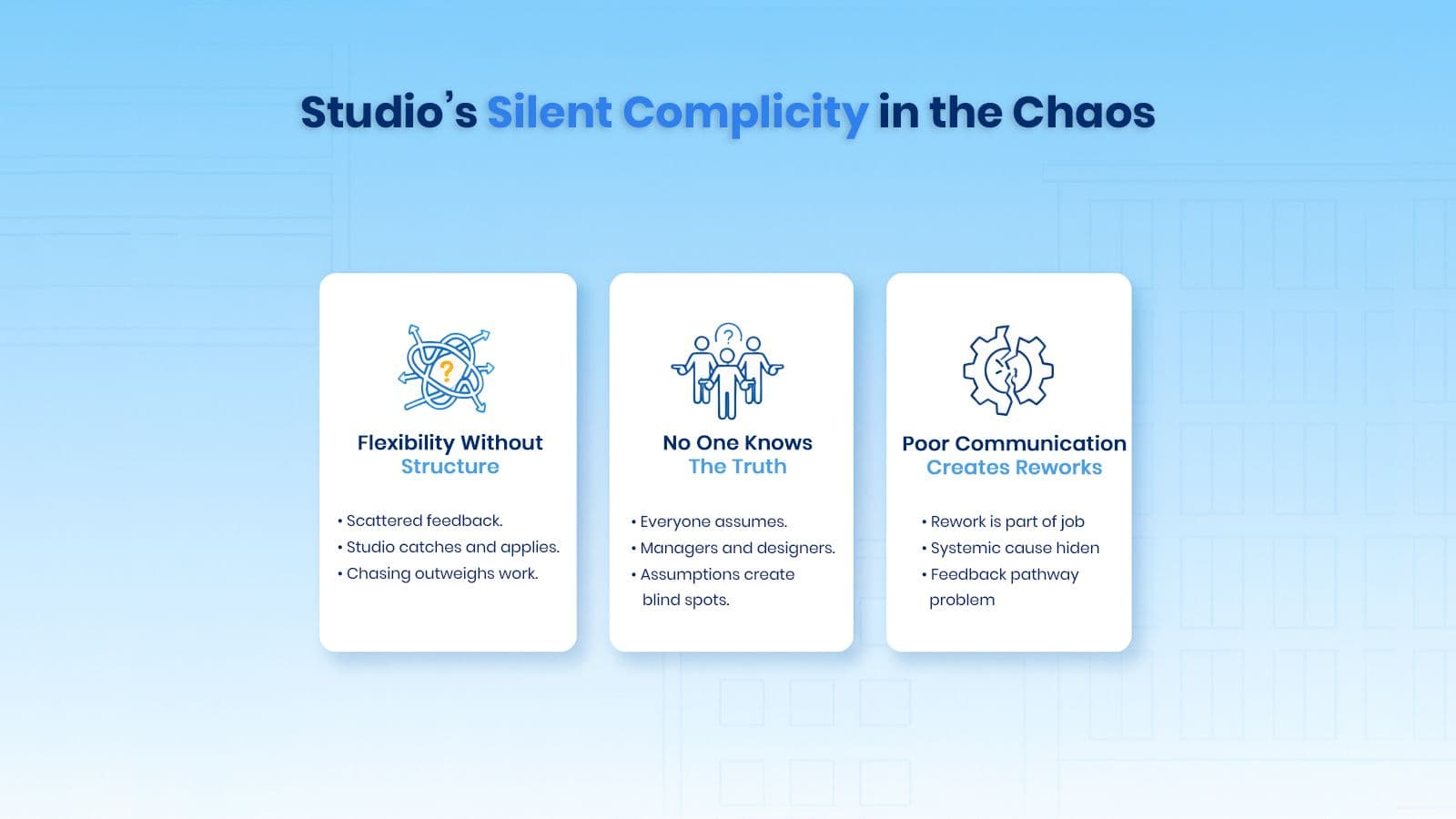
Studios keep multiple communication channels open because they want to appear responsive and flexible. But flexibility without structure becomes a trap. The client becomes accustomed to sending feedback anywhere and everywhere. Eventually the studio spends more energy catching feedback than applying it.
No one owns the single source of truth
Without a clearly defined central path, everyone assumes someone else is consolidating feedback. Designers assume managers captured the verbal approval. Managers assume designers tracked the WhatsApp comments. Over time this creates blind spots that lead to preventable revisions.
Unstructured communication normalises avoidable rework
When teams are used to fixing misunderstandings late, they begin to accept rework as part of the job. This normalisation hides the systemic cause. The problem is not the project. It is the pathway the feedback travels through.
Conclusion
Design quality is not determined only by talent. It is determined by the clarity of communication surrounding that talent. Studios invest heavily in tools for creation but often overlook the tools needed to preserve context. When feedback arrives from everywhere, intent gets diluted, decisions lose traceability and projects move in directions no one intended. The cost shows up as last minute scrambling, frustrated clients, confused designers and work that feels harder than it should.
Centralised feedback pathways are no longer optional for modern studios. They are essential for protecting the integrity of design decisions. This is exactly why ProjectsMate exists. It becomes the single home for all feedback, all revisions and all decisions, ensuring alignment stays intact from the first brief to the final delivery. In a world full of scattered communication, ProjectsMate keeps every project anchored to one clear truth.